How to Follow Up on a Job Application Without Being Annoying
Learn how to follow up on a job application: when to reach out, who to contact, what to write, and email templates you can personalize and send today.
 JobzseekerAI Team7 min read
You found a job that fits, tailored your resume, wrote a careful cover letter, and hit submit. Then nothing happened. A week passes, then two, and the only message in your inbox is the automated "we received your application" email.
Silence after applying is common, and it doesn't always mean rejection. Hiring teams juggle hundreds of applications, internal approvals, and their regular work. A short, well-timed message can bring your application back to the top of someone's mind. This guide covers how to follow up on a job application: when to do it, who to contact, what to say, and when to move on.
Should You Follow Up at All?
In many cases, yes. A polite follow-up shows interest and initiative, and it costs the reader less than a minute. It tends to help most at small and mid-sized companies, where the person reading your email may be the one making the hiring decision.
There are a few situations where you should hold back:
- The posting says "no calls or emails, please." Respect it. Ignoring a clear instruction is a bad first impression.
- You applied through a large company's portal and have no named contact. A generic message to a careers inbox rarely gets read.
- The application deadline hasn't passed yet. Many teams don't start reviewing until the posting closes.
How Long to Wait After Applying for a Job
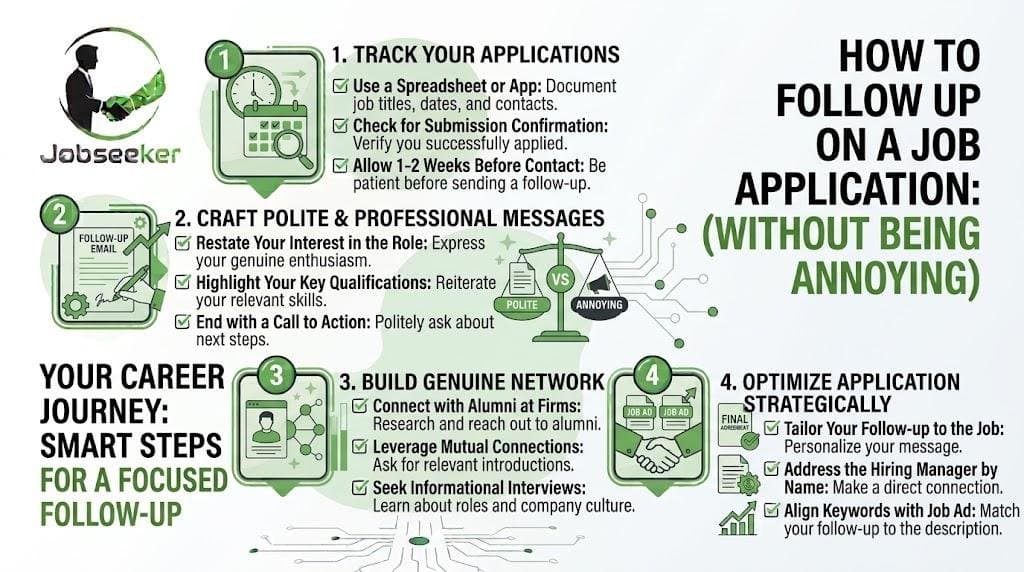
There's no official rule, but waiting about one to two weeks after you apply is a reasonable default. That gives the team time to start reviewing applications without letting so much time pass that the role is already filled.
Adjust based on what you know. If the posting listed a closing date, wait about a week after that date. If a recruiter told you to expect news by a certain day, wait until that day passes, then add a day or two. For hourly roles in retail, restaurants, or warehouses, hiring often moves faster, so a follow-up within three to five business days is usually fine.
How to Find the Hiring Manager or the Right Contact
A follow-up only works if it reaches a person. Start by checking the posting itself; some list a recruiter or hiring manager by name. If not, try these approaches:
- LinkedIn. Search the company name with the department and a title like "manager," "director," or "recruiter." A team lead for the department you applied to is often the best choice.
- The company website. Smaller businesses frequently list team members on an "About" or "Team" page.
- Your network. If anyone you know works there, ask whether they'd be comfortable sharing who's hiring for the role, or even passing your name along.
Choose one primary contact. Messaging five people at the same company about the same application can feel like pressure rather than interest.
How to Follow Up on a Job Application by Email
A good follow-up email after applying is short enough to read in 30 seconds. It should include:
- 1A clear subject line with the job title
- 2The role you applied for and roughly when
- 3One sentence connecting your background to the job
- 4A simple question about next steps
- 5A thank-you and your contact details
Follow-up email template
Subject: Following up on Customer Success Manager application
Hi Ms. Patel,
I applied for the Customer Success Manager position on March 4 and wanted to follow up to say how interested I am in the role. In my current position, I manage onboarding for about 50 small-business clients, and your focus on long-term customer relationships matches the way I like to work.
Could you share where you are in the hiring process, or whether there's anything else I can provide? I'd welcome the chance to talk.
Thank you for your time,
Jordan Lee
(555) 010-2234
Notice what the email avoids: no long recap of your resume, no apology for "bothering" anyone, and no demand for a decision. It's easy to reply to, which is the whole point.
When you have something new to share
A follow-up becomes even stronger when you can add something new, like a certification you just earned, a relevant project you finished, or a referral from someone at the company. Mention it in one sentence: "Since applying, I've completed my Google Analytics certification, which relates directly to the reporting work in this role." It gives the reader a fresh reason to look at your application.
Other Ways to Check Your Job Application Status
Email isn't the only option. Many company application portals show your job application status, so log in and check before reaching out. If it says "under review" or "in process," you can still follow up, but keep your message brief.
For small local businesses, a short phone call can work well, especially for hourly or customer-facing roles. Keep it to a minute: introduce yourself, mention the position and when you applied, and ask whether there's a good time to check back. For restaurants and retail stores, stopping by during a slow period, such as mid-afternoon on a weekday, and politely asking for the manager is still common and often welcome.
What to Do After No Response After Applying
If your first follow-up gets no reply, it's reasonable to send one more about a week later. Keep the second follow-up email even shorter than the first:
Subject: Re: Following up on Customer Success Manager application
Hi Ms. Patel,
I wanted to check in once more about the Customer Success Manager role. I'm still very interested and happy to share anything that would help. Thanks again for considering my application.
Best,
Jordan
After that, stop. Two follow-ups show interest; a third starts to feel like pressure. No response after applying usually reflects the company's process, not your worth, and it's better to put that energy into new applications. If the company posts another role that fits later, you can apply again and mention your continued interest.
Follow-Up Mistakes to Avoid
- Following up the day after you apply. It signals impatience rather than enthusiasm.
- Sounding frustrated. Lines like "I haven't heard anything yet" or "I'm surprised no one has responded" put the reader on the defensive.
- Attaching your resume again without being asked. They already have it. Offer to resend it instead.
- Using a vague subject line. "Checking in" or "Question" gets lost. Always include the job title.
- Contacting people through personal channels. Stick to work email and professional platforms rather than personal social media accounts.
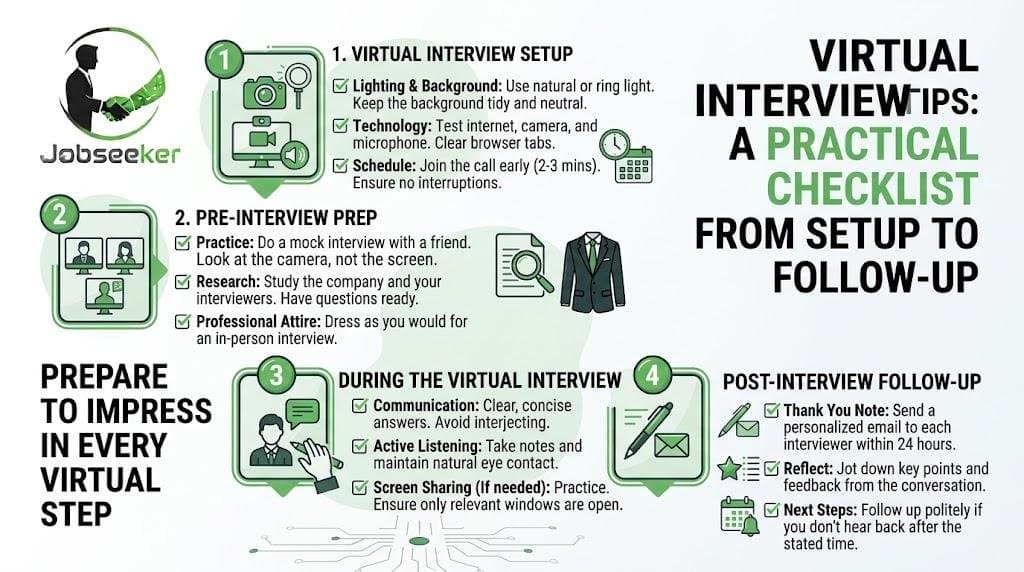
Following up after an interview is a different situation, with different timing and a thank-you note involved. Our virtual interview checklist covers that stage.
Spend Less Time Waiting on Replies
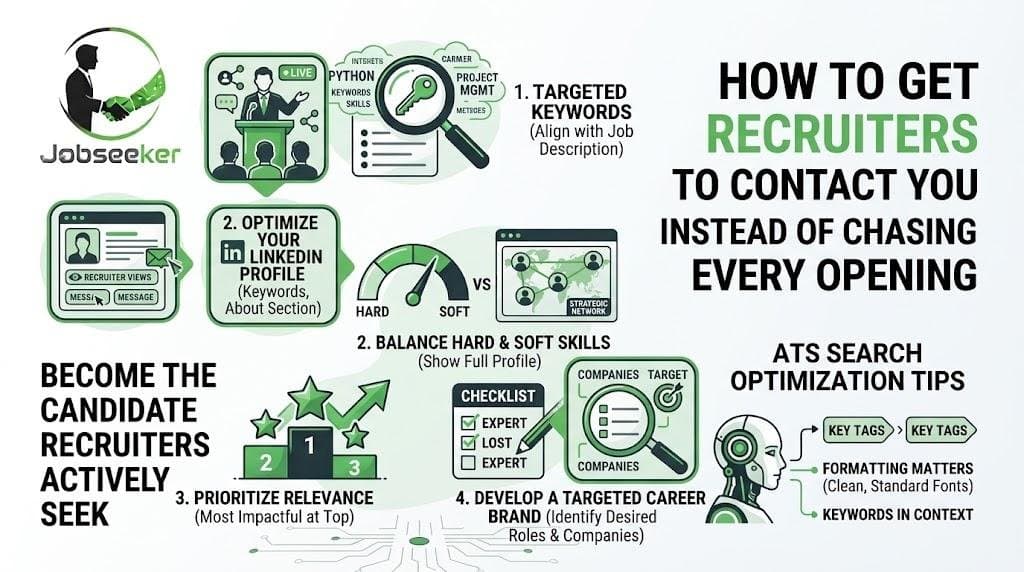
Following up helps, but a job search built entirely on cold applications and waiting is exhausting. It's worth balancing outbound applications with ways for employers to come to you. Our guide on how to get recruiters to contact you explains how to build a profile that shows up in recruiter searches.
On JobzseekerAI, companies describe the role they're hiring for and the platform's Smart Matcher ranks candidates based on skills and experience. When a company wants to connect, the conversation happens inside a built-in chat, and the platform can schedule a Google Meet call with calendar invites for both sides, so there's less guessing about who to email or whether your message arrived. It's free for job seekers to create a profile.
If you're applying while still employed, be thoughtful about where your follow-up emails go and which devices you use. Our guide on how to job search while employed covers how to keep things discreet.
Frequently Asked Questions
Is it OK to follow up on a job application?
+
Yes, in most cases. A short, polite message one to two weeks after applying is normal and rarely hurts your chances. The main exception is when the posting asks applicants not to follow up.
Should I follow up by email, phone, or LinkedIn?
+
Email is the safest default for office and professional roles. LinkedIn messages work when you can't find an email address. Phone calls or in-person visits fit better with small local businesses and hourly roles.
What if I applied through a job board and don't know who's hiring?
+
Try to identify the hiring manager or recruiter on LinkedIn or the company website. If you can't find anyone, checking the application portal for status updates may be your best option.
How many times should I follow up?
+
Twice is a reasonable limit: one follow-up after about one to two weeks, and a brief second message about a week later. After that, move on.
Can following up hurt my chances?
+
A respectful, well-timed message almost never does. Frequent messages, a demanding tone, or contacting several people at once can create a negative impression.
The Bottom Line
Knowing how to follow up on a job application comes down to timing, the right contact, and a message that's easy to answer. Wait one to two weeks, find a real person, keep your email short and specific, and stop after two attempts. Then keep applying. The candidates who handle follow-ups calmly while keeping their search moving are usually the ones who land offers sooner.
Let the right work find you.
Upload your CV once. JobzseekerAI matches you with companies, and your contact details stay hidden until a company unlocks your profile.
Create your free profile