How to Write a Resume Summary That Makes Recruiters Keep Reading
Learn how to write a resume summary in three sentences, with examples for entry-level, experienced, and career-change candidates, plus mistakes to avoid.
 JobzseekerAI Team8 min read
The top third of your resume gets the most attention, and the summary sits right in the middle of it. It's the first real sentence a recruiter reads about you, and it often decides whether they read the rest carefully or skim it on the way to the next application.
Most summaries waste that spot. They're packed with phrases like "results-driven professional" and "proven track record" that could describe anyone. This guide explains how to write a resume summary that sounds like you, uses evidence instead of adjectives, and fits the job you actually want, with examples for different career stages.
What a Resume Summary Is (and What It Isn't)
A resume summary, sometimes called a professional summary for a resume or a resume profile, is a short paragraph of two to four sentences at the top of your resume. Its job is to tell the reader who you are professionally, what you're best at, and why you fit the role, in about ten seconds of reading.
It isn't a career history. Your experience section already covers that. It also isn't a list of personality traits. The best summaries read like a short pitch backed by one or two facts.
Resume summary vs objective
The resume summary vs objective question comes down to focus. An objective describes what you want ("seeking a role in..."). A summary describes what you offer. For most job seekers with some relevant experience, a summary is the stronger choice because employers care more about what you bring than what you're hoping to get.
An objective can still make sense when your background doesn't make your goal obvious, such as a student applying for a first job. Even then, the best objectives borrow from summaries by including evidence, not just intentions.
How to Write a Resume Summary in Three Sentences
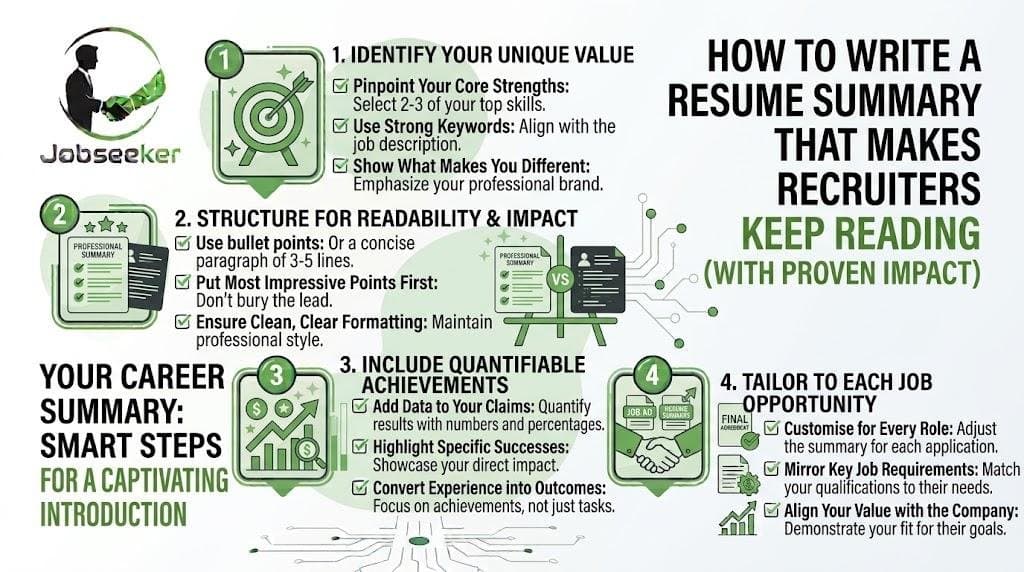
A simple three-sentence structure works for nearly every field. Each sentence has one job.
Sentence one: your professional identity
Name your role or field, your level of experience, and your specialty. "Registered nurse with six years of experience in emergency and trauma care" tells the reader far more than "dedicated healthcare professional."
Sentence two: your strongest proof
Pick the one achievement or responsibility that best shows what you can do. Numbers help when you have them and can verify them: budgets managed, teams led, accounts handled, processes improved. If you don't have numbers, describe scope instead. "Trained 12 new hires on hospital charting systems" is concrete even without a percentage attached.
Sentence three: the skills and value you bring to this job
Connect your background to the role you're applying for. This is the right place for two or three of the skills the posting emphasizes, written as part of a sentence rather than a keyword list.
Put together, it might look like this:
"Registered nurse with six years of experience in emergency and trauma care at a Level II trauma center. Trained 12 new nurses on triage protocols and charting in Epic. Known for staying calm in high-volume shifts and communicating clearly with patients' families during stressful situations."
Resume Summary Examples by Career Stage
These resume summary examples show how the same structure adapts to different situations. Use them as models, and replace every detail with your own.
Entry-level resume summary
"Recent marketing graduate with hands-on experience running social media for two student organizations, growing combined followers through consistent weekly content. Comfortable with Canva, Google Analytics, and basic copywriting. Looking to bring strong organization and fresh content ideas to an entry-level marketing coordinator role."
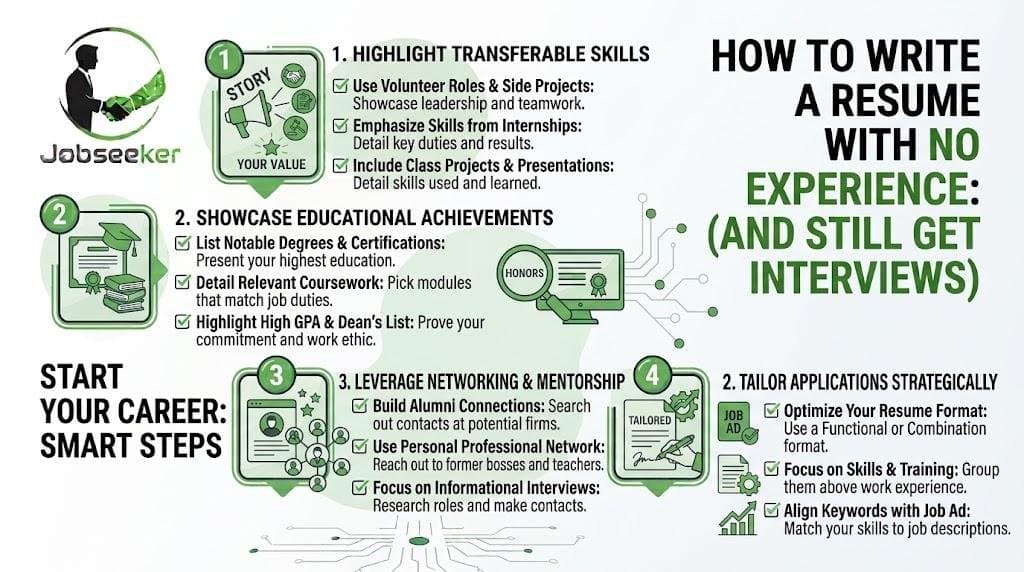
An entry-level resume summary leans on school, internships, part-time work, and projects. That's expected. What matters is that each claim is specific.
Mid-career professional
"Operations analyst with five years of experience in e-commerce fulfillment. Redesigned the returns process for a regional retailer, cutting average processing time from four days to two. Skilled in SQL, Excel modeling, and translating warehouse data into decisions managers can act on."
Senior or management level
"Engineering manager with 11 years in software development, including four years leading teams of 6 to 15 engineers. Led the migration of a legacy billing platform to a cloud-based system without customer-facing downtime. Focused on building teams that ship reliably, with strong hiring, mentoring, and cross-functional planning experience."
Resume summary for career change
"Former retail store manager transitioning into human resources, with seven years of experience hiring, training, and scheduling teams of up to 25 employees. Recently completed an HR certificate program covering employment law basics and benefits administration. Brings practical experience resolving employee conflicts and onboarding new staff in a fast-paced environment."
A resume summary for career change does extra work. It explains the switch, highlights transferable skills, and shows proof that you've invested in the new field through courses, certifications, or side projects.
Freelancer or contractor
"Freelance graphic designer with four years of experience creating brand identities and marketing materials for small businesses and nonprofits. Delivered more than 40 logo and branding projects, most through repeat clients and referrals. Seeking an in-house design role where I can apply the same speed and client communication skills to a single brand."
Add a Resume Headline Above Your Summary
A resume headline is a single line placed between your contact details and your summary. Think of it as a title for your resume: "Bilingual Customer Support Specialist | Zendesk and Salesforce" or "Data Analyst | SQL, Python, Tableau."
A headline is optional, but it helps when your past job titles don't clearly match the role you're targeting. It tells the reader immediately how to categorize you, which is especially useful if you're changing fields or your previous employer used unusual job titles.
Tailor Your Summary to Each Job Posting
Your summary is the easiest part of your resume to adjust between applications, and it's worth doing. Before you apply, reread the posting and note the two or three requirements it mentions first or repeats most. If your experience genuinely matches them, make sure they appear in your summary using similar wording.
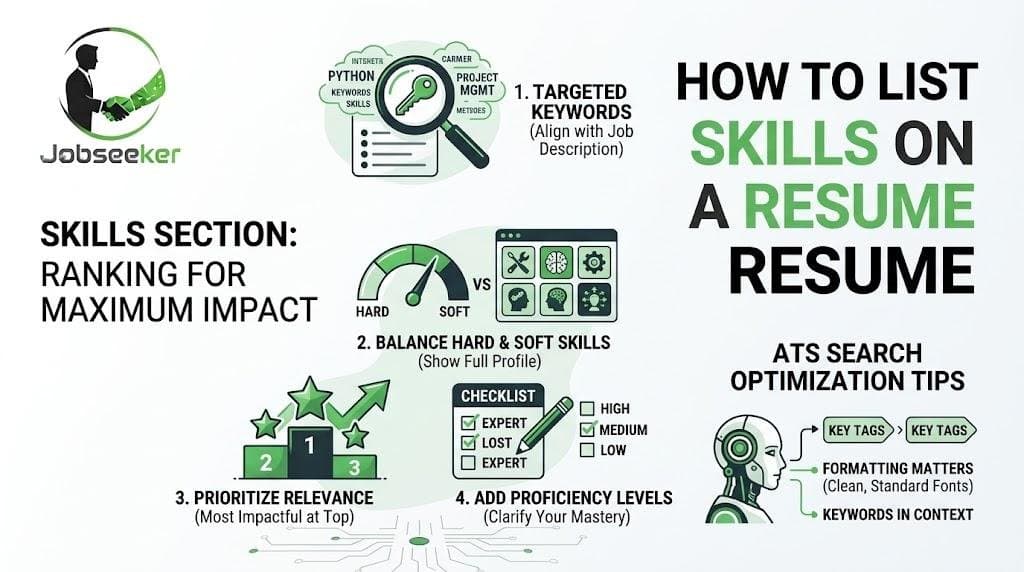
This helps both kinds of readers. A recruiter sees the connection instantly, and resume screening software has a better chance of matching your resume to the role. Not every system works the same way, and no wording guarantees you'll pass a screen, but clear, relevant language consistently does better than vague branding. Our guide on how resume parsing works explains what that software is looking for, and our article on how to list skills on a resume covers the section that should back up your summary.
Mistakes That Weaken a Resume Summary
- Using buzzwords instead of facts. "Dynamic, detail-oriented self-starter" gives the reader nothing to remember. Replace each adjective with something you did.
- Writing in the first person. Resume summaries are usually written without "I" or "my." Start with your title or your experience instead.
- Making it too long. If your summary runs past four or five lines, it stops being a summary. Cut anything already covered clearly elsewhere.
- Claiming skills you can't support. Everything in your summary should be easy to back up in your experience section and in an interview.
- Using the same summary for every job. A summary written for a sales role won't land the same way on an account management application, even if the jobs look similar.
Your Summary Beyond the Resume
A strong summary is useful in more places than your resume. With small edits, it can become your LinkedIn "About" section, the opening of a cover letter, or the answer you give when someone at a networking event asks what you do.
It also matters on platforms where employers search for candidates. When you upload your CV to JobzseekerAI, the CV Categorizer reads it, extracts your skills, education, and experience, and generates a short two-line summary along with a role category. Companies see that kind of information first, before any contact details. A resume with a clear summary and specific skills gives the software better material to work with, so the profile companies see reflects your strengths accurately. You can learn more about how the matching works, or read our guide on getting recruiters to contact you for more ways to become easier to find.
Frequently Asked Questions
How long should a resume summary be?
+
Two to four sentences, or roughly three to five lines on the page. Shorter is usually better as long as it includes your identity, a piece of proof, and the value you bring.
Do I need a resume summary at all?
+
It isn't required, but it helps most people, especially experienced candidates and career changers whose resumes need context. If space is tight and your experience speaks for itself, a well-written headline alone can work.
Should my summary include keywords from the job description?
+
Yes, when they honestly describe your experience. Work them into natural sentences instead of listing them. Stuffing keywords you can't support usually backfires in interviews.
Can I use a summary if I have no experience?
+
Yes. Focus on education, internships, projects, volunteer work, and specific skills. Some people in this situation prefer an objective, but a summary built on concrete details works just as well.
Is a resume profile the same as a resume summary?
+
In most cases, yes. "Profile," "professional summary," and "summary of qualifications" are different labels for the same section, although a summary of qualifications is sometimes written as short bullet points instead of a paragraph.
Write Yours Today
Learning how to write a resume summary is mostly about replacing vague claims with specific ones. Start with who you are professionally, add the strongest proof you have, and finish with the value you'd bring to this particular job. Draft it in three sentences, read it out loud, and cut anything that sounds like it could belong on someone else's resume. Then update it each time you apply, so the first thing a recruiter reads is always aimed at the job in front of them.
Let the right work find you.
Upload your CV once. JobzseekerAI matches you with companies, and your contact details stay hidden until a company unlocks your profile.
Create your free profile